

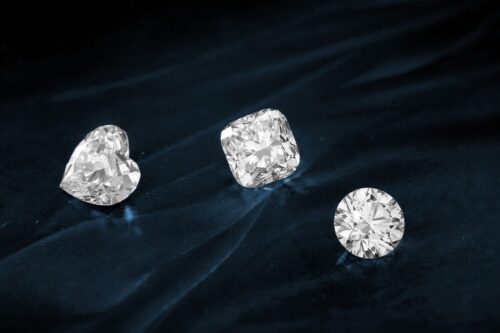
Diamond is narrated or believed as symbols of wealth, love, and eternal commitment, particularly in engagement rings. On the other hand, we use them for their extreme hardness in industrial tools, from saw blades to surgical instruments. This duality highlights a fascinating contrast: a utilitarian material transformed into a profound cultural icon.
For centuries, India was the world’s sole source of diamonds, primarily from the legendary Golconda mines. As the British and other European powers gained influence, many Indian maharajas began to commission pieces from renowned Parisian jewelers like Cartier and Van Cleef & Arpels. They sent their chests of priceless, uncut stones to Europe. The relationship between Indian kings and diamonds was one of both opulence and utility. They were the very embodiment of a ruler’s power, legacy, and a tangible link to India’s rich and glittering past.
Do you know? To mine one carat of diamond, an average 250 tons of earth is moved. Now, imagine the amount of carbon and other greenhouse gases released into the atmosphere to achieve it.
A whopping 160 kg greenhouse gases are emitted to mine one carat diamond. Mining diamonds is known to create significant ecological disruption—land degradation, deforestation, water contamination, and loss of biodiversity.
It is also notorious for human rights violations, often providing unsafe labor conditions, employing child labor to mine the ‘precious stone.’ Thus, sustainability practices in the diamond industry were demanded and envisioned.
Artificial diamonds came into the market in the name of sustainability, eco-friendly, and cruelty free alternatives to the natural diamonds. Before exploring the sustainability factors, let’s understand Artificial diamonds which were lab-grown, lab-created, synthetic diamonds or real diamonds? They are not imitations or simulants like cubic zirconia or moissanite.
What makes a natural diamond different from the artificial one is its origin. Natural diamonds are formed deep within the Earth’s mantle under intense heat and pressure for billions of years. This distinguished environment makes the stone a priced procession.
Artificial diamonds, on the other hand, are created in a controlled laboratory environment. In these labs, an intense condition similar to the depth of the Earth is replicated for the formation of artificial diamonds.
In short, they are chemically, physically, and optically identical to diamonds mined from the Earth. They resemble the same brilliance and sparkle of natural diamonds. With bare eyes, it is impossible to differentiate between natural diamond and artificial diamond. There are two major production techniques used to produce such diamonds.
First, is the High-Pressure, High-Temperature (HPHT). Under this process, the extreme heat and pressure found in the Earth’s mantle is mimicked in the facility. And a small, pre-existing diamond seed(a small, high-quality diamond crystal—either a natural diamond or a previously grown lab diamond) is placed in a chamber.
Along with it, a pure carbon source, mainly graphite is placed. Next, the chamber is heated to temperatures of over 1,300 degree Celsius and 870,000 PSI immense pressure is applied on it. This will melt the carbon. Once it starts melting, it tends to return to a solid, crystalline state. At this stage the seed diamond provides a perfect surface for this crystallization to happen. Over several weeks, this crystallize happens around the diamond seed, growing a new diamond.
The second method, also called the Chemical Vapor Deposition (CVD) method. Here the same crystallization technique is used – without any carbon source like graphite. Here, a mixture of gases, primarily methane and hydrogen will substitute the carbon source.
In this method, a thin slice of a diamond seed is placed in a vacuum chamber. Inside the chamber, the mixture of gas is filled. Next, microwaves (a usual energy source) is used to heat the chamber to a high temperature (around 800−900 degree celsius).
This process will break down the bonds of the methane molecule, creating a plasma of free carbon atoms. Eventually, these carbon atoms fall onto the diamond seed, bonding to the seed, growing the diamond layer by layer.
In both the techniques, there is a fair share of energy consumption and emission. From method to method, it may differ. Yet, the fact cannot be denied. For instance, the HPHT method requires continuous high pressure and temperatures exceeding 1300°C for extended periods, often several days. If the electricity used is derived from coal or other fossil fuels, the carbon footprint becomes humongous, and goes against the notion of ‘green.’
On the contrary, CVD (chemical vapor deposition) method relies on lesser pressure and energy usage compared to HPHT. Thus, energy consumption would be on the lower side. Again, only if the foundry is powered by renewable energy sources, then sustainability angle comes into CVD diamonds.
Moreover, there is a critical ingredient in both processes that makes the ‘green’ factor of artificial diamonds questionable. For HPHT, it is graphite, and in CVD it is methane. Mining graphite or the process of producing, transporting, and using methane gas is energy intensive.
Nonetheless, artificial diamonds have a natural advantage over natural diamonds, lab grown diamonds do not require a humongous amount of excavations, minings, and processing chains and minimizes environment from degradation, avoids pollution and carbon emissions.
Most artificial diamonds are produced in controlled environments. This prevents worker exploitation and child labour to an extent. Most importantly, artificial diamonds are free from the issues associated with “blood diamonds.” Use of blockchain technology, certifications such as SCS-007 and Carbon Neutral helps third-party to verify ethical sourcing and climate impact of artificial diamonds. All these factors make artificial diamond an ecological edge compared to natural diamonds.
It is imperative to note that the artificial diamond industry is edging its game in the field of sustainability and net-zero emission. Companies are adopting renewable energy such as solar and wind energy to run their labs.
New technology such as AI-driven reactor management systems helps to optimize energy usage. Advanced closed-loop systems to recycle hydrogen and methane gases, greywater systems, plasma reactors with catalytic converters are some innovative technologies used to reduce VOC emissions. Many labs are experimenting with organic waste-derived carbon source, bio-methane and green hydrogen are replacing fossil-based inputs and carbon sources.
Whenever you think about diamonds, give a glance about where? How? It was produced and procured!
…………………………………………………………………………………………………………………………………………………….
Sources
- https://www.gemsociety.org/article/sustainable-alternative-to-diamond-mining
- https://www.spglobal.com/content/dam/spglobal/mi/en/documents/general/The-Socioeconomic-and-Environmental-Impact-of-Large-Scale-Diamond-Mining_DPA_02-May-2019.pdf
- https://humanrightsclinic.law.harvard.edu/wp-content/uploads/2022/10/Digging_In_The_DirtLR.pdf
- https://diamondrensu.com/blogs/lab-grown-diamonds/pros-and-cons-of-lab-grown-diamonds#:~:text=Pros:%20Ethical%20sourcing%2C%20lower%20environmental,%2C%20preferences%2C%20and%20budget%20considerations.
- https://www.gemsociety.org/article/lab-grown-diamond-production-methods
- https://www.igi.org/consumer-education/natural-diamonds/#:~:text=Natural%20diamonds%20formed%20billions%20of,and%20brought%20them%20to%20us.
- https://diamondrensu.com/blogs/education/hpht-vs-cvd#:~:text=In%20terms%20of%20physical%20properties,sensitive%20applications%20like%20radiation%20detectors.
- https://www.mdpi.com/1996-1073/14/21/7062
- https://link.springer.com/article/10.1007/s12303-025-00027-2
- https://www.unep.org/news-and-stories/story/methane-emissions-are-driving-climate-change-heres-how-reduce-them#:~:text=Agricultural%20methane%20doesn%27t%20only,can%20we%20reduce%20methane%20emissions
- https://www.nature.com/articles/s41599-024-03195-y
- https://www.growndiamondcorp.com/blog/lab-grown-diamonds-are-ethical-far-from-child-labor
- https://www.scsglobalservices.com/services/certified-sustainability-rated-diamonds#:~:text=What%20are%20Certified%20Sustainability%20Rated,contribute%20to%20a%20safer%20world.
- https://www.clearneutral.org/#:~:text=Our%20Process,its%20carbon%20footprint%20shouldn%27t.
- https://changestarted.com/are-lab-grown-diamonds-an-eco-friendly-choice-for-a-sustainable-future
- https://patents.google.com/patent/GB2535152A/en