
A quirky, gremlin-faced doll is emerging as an unlikely symbol of collective anxiety and economic turmoil. At first, it might seem odd that people are lining up for a doll in the midst of intensifying climate change, technological disruption, and global tensions. However, this is a classic example of the “lipstick effect,” theory where consumers, facing financial uncertainty, gravitate toward small, affordable luxuries—like Pop Mart’s collectible Labubu dolls—to find a sense of happiness and normalcy.
In the past year it was torn by war, climate change, inflation, technological upheavalment, job layoffs, bushfires and many more. To cope with the crumbling surroundings, and climate anxieties people found the labubu doll as a cliffhanger. This may sound bizarre. Nonetheless, this rarity of phenomenon can encapsulate the year 2024.
The consequences of climate change are showing up in unexpected ways: from the emergence of new anthropogenically influenced seasons to a measurable slowdown in the Earth’s rotation. Around the globe, countries are now grappling with these disrupted weather patterns.
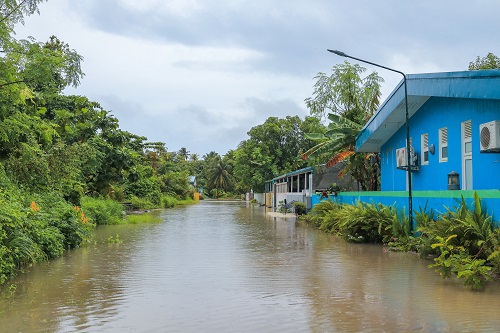
One example is the “haze season” in Southeast Asia. For decades, agricultural fires used to clear peatlands and forests have released thick smoke, creating a transboundary haze. This has become a regular occurrence in cities like Kuala Lumpur and Singapore over the past three decades. Inception of such unrhythmic seasons pose a severe threat to climate patterns. Today, climate change is waging its war in the form of unprecedented, violent climatic disasters, floods, cloud bursts.
Climatic pattern change has led to higher air temperature. This increased air temperature holds more moisture. Heavy moisture gets condensed, when it makes landfall, it is called cloudburst. The impact of cloudbursts are severe, often resulting in flash floods, landslides, and debris flows that can wipe out entire villages, destroy infrastructure, and cause significant loss of life and property.
Cloudbursts are formed and dissipate very quickly, sometimes in less than an hour. Thus, forecasting cloudbursts is difficult. Lack of observational data and topographical complexity makes this phenomenon extremely dangerous. Along with natural calamities, unplanned development deserves serious attention too. In the last few years, the Himalayan has seen rampant expansions of infrastructure projects by ignoring basic rules of a frail environment.
Natural calamities are not limited to rural or highlands. Now, urban areas are facing the brunt of both climate change and uncontrolled development.
Globally, the year 2024 witnessed several elections and people participated in democratic process with an anticipation to address several burning issues: climate, health care and peace etc. However, the geopolitical tensions that are causing intensified wars and conflicts are seen as a stark reminder of the fragile nature of peace and the complex web of geopolitical paradox.
As usual, crude is the center of the global energy debate and energy dependent economies are experiencing the geopolitical heat. For instance, India’s oil dependency is putting pressure on the global trade ecosystem and bio alternatives. However, on field implementation results are in oddity due to confusions, misinformation and adoption strategies.
Another trivial matter that has generated outsized concern is the scramble for AI supremacy. As corporations and governments pour massive investments into artificial intelligence, thousands of people are losing their jobs to machines.
Amid the upheaval, Albania has decided to appoint the world’s first ‘AI minister’ Diella. Every massive tech disruption has socio-economic implications on their people and the critical lens towards AI has to be kept in place for understanding the consequences.
Elon Musk’s xAI has released GROK4, and he said “I think it may discover new technologies as soon as later this year, and I would be shocked if it is not done so next year.”
AI adoption and power consumption is another trend that needs to be observed. The graphics processing units or GPUs are the ones that massively parallel process power, enabling efficient training of neural networks and handling large datasets. Therefore, GPUs consume a tremendous amount of power.
Studies have estimated that the electricity consumption of data centers is projected to double by 2030, and may reach approximately 3% of total global electricity consumption. Other researchers indicate that in a high-growth scenario, it may reach 4.4% by 2035.
On June 19, 2024, the UN General Assembly declared 2025 the International Year of Cooperatives under the theme “Cooperatives Build a Better World”, recognizing their role in driving sustainable development and advancing the UN SDGs.
As of July 2025, India has over 8.44 lakh cooperatives across 30 sectors with over 30 crore members. In the last few decades, Indian cooperatives are catalysing positive impact in different fields, notably in environment and climate action and proving the economic viability and operational feasibility at scale.
At Ecopreneur India, we believe in collective actions for climate justice and economic inclusivity society. Team Ecopreneur is putting all the efforts to catalyze co-operative movement in India with our core objective of reconnecting people with nature