
The year 2023 marked the lowest water levels in the Panama Canal due to drought. On 21st May 2024, flight journey for Singapore Airlines turned haywire for passengers due to a sudden extreme turbulence. These are two different stories hitting turbulence in the $25 trillion world trade industry.
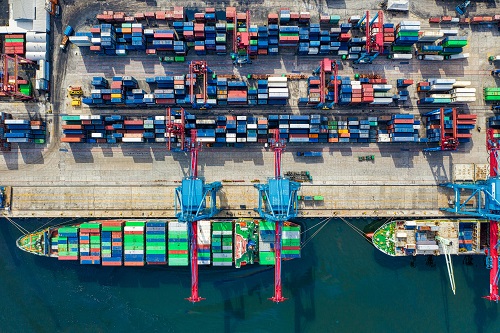
The gradual increasing climatic disasters have taken a toll on supply chain infrastructures. It is estimated that disruptions in supply chains due to climate change can cause an economic loss between $3.75 trillion and $24.7 trillion by 2060.Global supply chain depends upon road, rail, air, and water. 90% of traded goods are shipped by sea. In India, roadways contribute more than 3.6 per cent of Gross Domestic Product (GDP). Global Logistics Market size was valued at USD 9312.31 billion in 2021 and is poised to grow from USD 9833.8 billion in 2022 to USD 15206.62 billion by 2030.
If we delve into it, these misfortunes are alarming on something major that needs attention in the supply chain. Any disturbance in these supply chains will send shockwaves that cost the economy, businesses and even on the people.
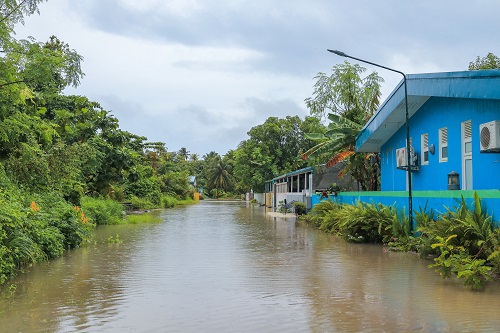
For instance, insufficient water in waterways and increasing sea levels pose a serious threat to the seaports. Increasing cases of clear-air turbulence and extreme heat waves hampers the movement of goods through air. Frequent floods, storms and landslides and intensified heatwaves clog both road and rail based transportation.
In addition to that, extreme weather conditions damage the warehouses, and factories resulting in their closures. These incidents can result in volatile commodity prices, disruption in business continuity, unavailability of goods etc,. However, the impact of supply chain disruption is far and beyond.
Delayed or suspended pharmaceutical supply chains can affect the efficacy of medicines. This puts human lives at risk. Also, supply chain destruction can also jeopardise rescue and humanitarian operations in the coming years. These are not much known effects of the supply chain damage. Thus, it calls for a detailed analysis and investigation on this topic.
Also, we have to consider the supply chain workforce who are tolling to meet our demands. Worsening climatic conditions impacts the workers and the employee’s physical and mental health and even endangers their lives. Sadly, weak labour regulations and policies are exploiting them and their working conditions.
Supply chain is an asset for every country. Thus, it needs to be either protected or new ones have to be built with climate resilience in mind. Before endeavouring into any of such steps, a careful analysis of the pros and cons are vital for strategic supply chain development.
——————————————————————————————————————-
Sources
- https://www.nature.com/articles/s41586-024-07147-z
- https://weareprocarrier.com/news/article/modes-of-transport-logistics?refererSource=wearedg
- https://www.woodwellclimate.org/drought-panama-canal-7-graphics/
- https://unctad.org/system/files/official-document/ditctab2024d1_en.pdf
- https://oec.world/en/profile/country/ind
- https://www.mckinsey.com/industries/aerospace-and-defense/our-insights/addressing-continued-turbulence-the-commercial-aerospace-supply-chain
- https://agupubs.onlinelibrary.wiley.com/doi/10.1029/2023gl103814
- https://www.unepfi.org/wordpress/wp-content/uploads/2024/05/Climate-Risks-in-the-Transportation-Sector.pdf
- https://www.pharmaceutical-technology.com/sponsored/the-impact-of-climate-change-on-the-pharma-supply-chain/
- https://natcen.ac.uk/hot-weather-wrecks-my-nerves-climate-change-and-workers-rights-vietnam
- https://www.ft.com/content/891ad973-56e3-464d-9b72-574534f34c53
- https://e360.yale.edu/features/how-climate-change-is-disrupting-the-global-supply-chain